
Understanding Harnett County Releases
“Released” records the end of one agency's custody. It does not always mean the person walked into the community. At the Harnett County Detention Center, a person may leave after posting bond, receiving unsecured conditions, completing a local sentence, receiving credit for time served, or obtaining another court-authorized discharge. The same roster change can also mark a transfer to the North Carolina Department of Adult Correction, another jail, the U.S. Marshals Service, or immigration custody. Detention staff execute the physical departure after the legal and administrative conditions are complete.
The agency that receives the person controls the next record. A direct county release is best proved by the sheriff's booking and release entry. A state-prison transfer starts an NCDAC trail in Offender Public Information, commonly called OPUS. Federal and immigration moves require separate locators. The Harnett court file explains the order, bond event, dismissal, or judgment behind a custody change, but it may not state the exact minute the person left the building.
- Discharge
- An end to a custody or supervision segment. The exact event and date matter.
- Time served
- A judgment recognizing that credited custody satisfies an active term.
- Detainer
- A request or authority that may move a person to another custodian instead of the community.
- Post-release supervision
- State supervision that follows prison for many Structured Sentencing felony cases.
Harnett County Release Paths
Release labels must be read with the destination. “Bonded,” “written promise,” and “unsecured bond” describe forms of pretrial release, not the final result of a charge. “Dismissed” can describe one case while another hold remains. A transfer ends Harnett custody but continues confinement. Likewise, leaving a state prison for post-release supervision ends the prison segment while the sentence continues under supervision.
| Recorded event | Meaning | Next official source |
|---|---|---|
| Bond or pretrial release | Community release with a duty to return to court | Sheriff release entry and eCourts case |
| Time served or sentence complete | Local active term satisfied | Judgment plus detention release time |
| Dismissal | A charge ended, subject to other cases or holds | Clerk file and sheriff record |
| NCDAC transfer | County custody ended and state custody began | OPUS incarceration record |
| Federal or ICE transfer | Another sovereign assumed custody | USMS, BOP, federal court, or ICE |
| Prison release | State incarceration ended, possibly into supervision | OPUS release and supervision events |
Read a Harnett Release Record
A strong release record links the departure to a stable booking or case identifier. Harnett's public vendor view emphasizes current confinements, admissions, charges, and arresting agency. Its rolling PDF covers recent incarcerations. Neither product is advertised as a historical release ledger. Documentary confirmation therefore comes from a targeted request for the existing booking and release-log entry. Ask the custodian to say whether the event was a community release or transfer.
| Requested field | What it establishes |
|---|---|
| Name and booking number | Connects the event to the correct detention record |
| Admission date and time | Marks the start of this custody segment |
| Release date and time | Records when Harnett stopped holding the person |
| Release disposition | Distinguishes bond, time served, discharge, or transfer |
| Releasing authority | Identifies the court, order, or other basis |
| Case and charge numbers | Links the jail event to the court record |
| Destination or receiving agency | Shows continued custody when the public record contains it |
A booking photograph may help resolve a same-name match, but it does not prove guilt or release. A bond amount also does not prove that bond was posted. For a state prisoner, read the incarceration event beside the next supervision event. Final sentence termination can occur later than physical release from prison.
Note: A recorded destination is often the field that separates community release from transfer after the same Harnett roster change.
Request Harnett Release Records
Harnett County accepts a public-record request by form or email. Jail material should identify the Harnett County Sheriff's Office and detention records as the record set. The sheriff is an elected office, so requesters should confirm routing if county public information does not hold the operational record. No fixed local response deadline or flat release-record fee was found. North Carolina law calls for access as promptly as possible and generally limits ordinary copy charges to actual reproduction cost, with a possible special service charge for extensive work.
- Collect the full name, booking or docket number, and a narrow admission-date range.
- Ask for the existing booking and release-log entry, not a new analysis or an open-ended explanation.
- Specify the release timestamp, disposition, authority, and receiving agency if those fields exist and are public.
- Request an electronic copy and a cost estimate before chargeable work begins.
- If no record is found, ask which custodian holds the register and whether a corrected date, number, or spelling would locate it.
The county request form and email address publicrecords@harnett.org provide a written trail. For a fresh event, the Harnett County Detention Center can be reached at 910-893-0257. Court filings belong to the Clerk of Superior Court, not the county public-information office.
The official request page and its routing options appear in the captured county interface below.
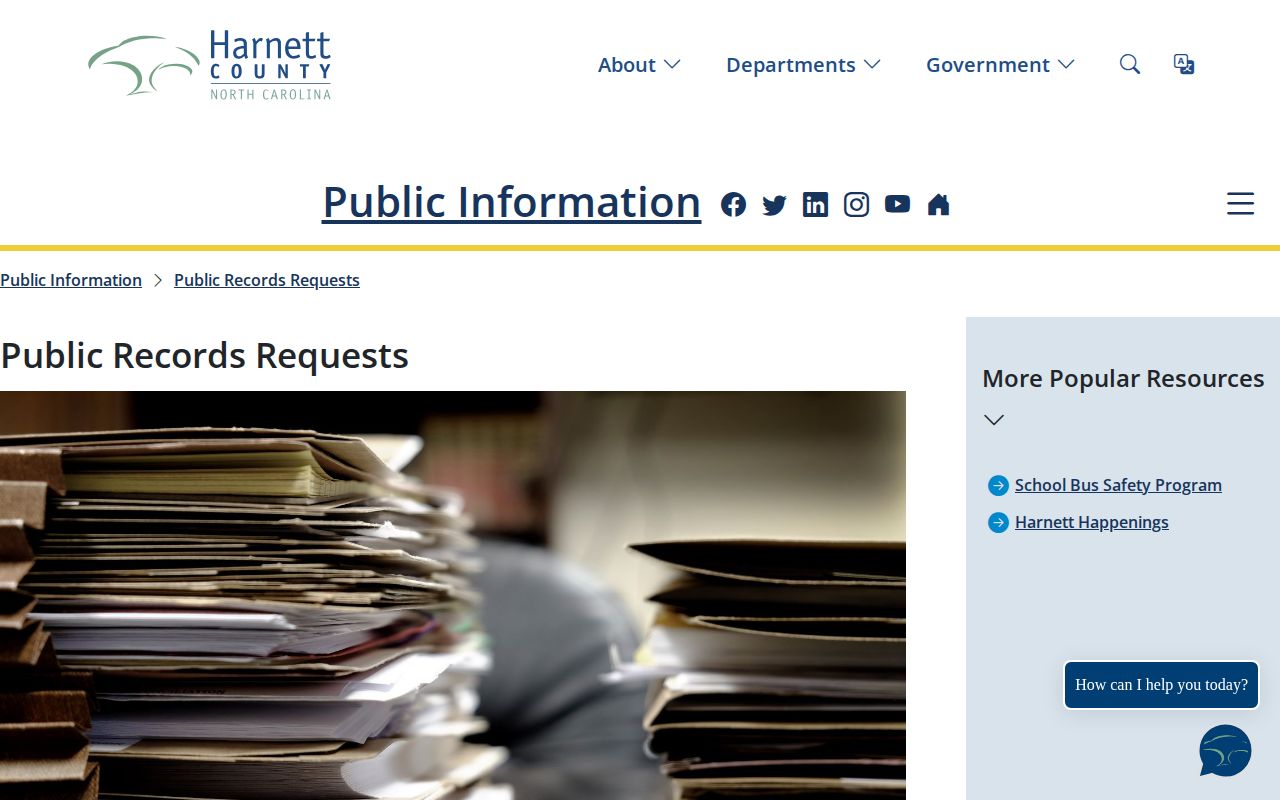
The page directs court-record questions elsewhere, which is why a release-log request and a clerk-file request may need to run in parallel.
Harnett Release Record Boundaries
North Carolina Chapter 132 defines public records and supplies access principles. G.S. 132-6.2 governs copy costs. Those provisions do not erase other confidentiality rules. Under G.S. 132-1.4, investigative records have a special boundary even though listed arrest facts remain public. Release-log data is not expressly one of the enumerated arrest facts, so classification and context can affect access.
A rotating web report is not a retention schedule. Older Harnett booking and release material may remain in an agency system after it leaves the public PDF, subject to records schedules, court orders, holds, and lawful restrictions. Juvenile, sealed, confidential, and expunged material cannot be reached through ordinary public channels. Expunction is a court remedy, not an automatic consequence of leaving jail. The North Carolina Judicial Branch expunction page explains the outcome-specific process.
Question: Does a missing jail entry mean it was expunged? No. It usually reflects the limits of a current or rolling display. Confirm the release event first, then use the court record for any expunction order.
Harnett Processes Over 6,000 Annually
Harnett's approved fiscal-year 2021–22 budget said the detention center processes more than 6,000 inmates per year. “Processes” is the precise term. It is not a count of unique people, bookings, releases, or average daily population. The figure explains why stable booking and docket identifiers matter when a live report changes quickly. A name-only comparison across two snapshots can merge people or mistake normal report turnover for a release.
The source is the Harnett County approved budget. Any newer publication should be checked before changing the figure or its label.
Note: A rolling public report can expire online while source booking and release records remain subject to official retention rules.
Search Harnett County Releases
Start with the last known custodian. A short Harnett jail stay belongs first to the sheriff and county court. A state felony commitment belongs to NCDAC, even when the conviction occurred in Harnett County. Federal prosecutions move through USMS and BOP, while immigration detention uses ICE. Collect only enough identifying detail to separate same-name records, such as a full legal name, approximate age, booking or OPUS number, and case number.
- Check the official inmate-population gateway and note the search time.
- Use the rolling incarceration PDF for a recent booking number, photograph, confinement date, charge, bond, and docket, not as a release list.
- If the person is absent, call detention staff and ask whether the departure was community release or transfer.
- Search OPUS after a state commitment or when supervision may follow.
- Read each Harnett eCourts case for the order, bond event, dismissal, or judgment behind the movement.
- Check BOP, federal court, USMS, or ICE when the record identifies another sovereign.
- Request the existing release entry when documentary proof is needed.
A person who leaves Current Confinements may have been released, transferred, or affected by a search mismatch. Absence alone is not community-release proof.
The Jail Releases: 24 Hours page explains Harnett's misleadingly named booking report. The Projected Release page separates future prison estimates from completed release events.
Search NCDAC Release Records
The NCDAC criminal offender search gateway leads to OPUS, NC SAVAN, and Interstate Compact resources. OPUS is the durable public trail for state-prison incarceration and North Carolina probation, parole, or post-release supervision. It is not a complete index of everyone booked in the Harnett County jail.
| Search or detail field | How to use it |
|---|---|
| OPUS number | Best public identifier for the state record |
| Name | Try accurate variants and compare other identity fields |
| Status | Read with the dated incarceration and supervision events |
| Incarceration history | Shows prison segments and movement records |
| Release information | Distinguishes an actual event from a prospective date |
| Supervision history | Shows probation, parole, or post-release activity |
Open the full detail. A projected date can change because of earned-credit decisions, loss of credit, amended judgments, jail credit, consecutive cases, detainers, or statutory rules. An actual release entry followed by “Post Release” is stronger evidence that the prison segment ended. A later revocation or new incarceration can change current status.
The official OPUS form and its available fields are shown below.
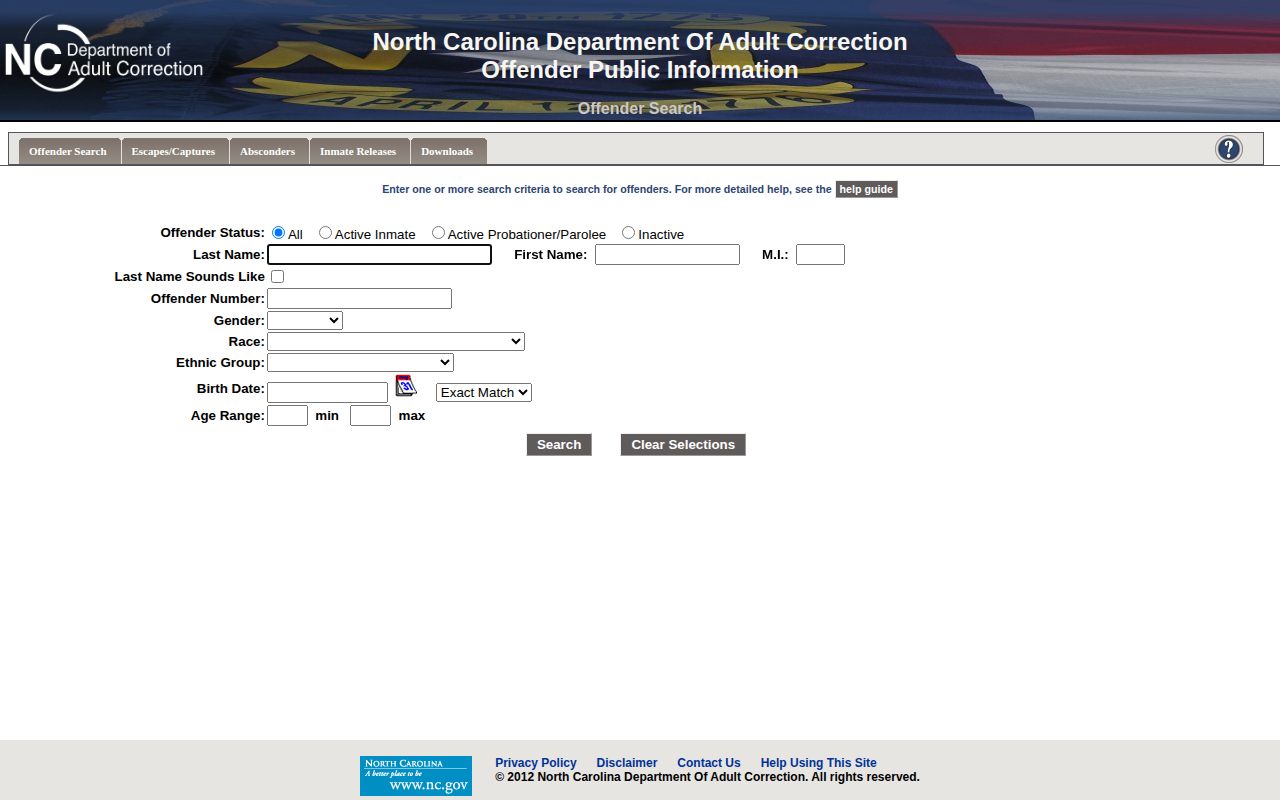
The form should be searched by OPUS number when known, then verified against the full event history rather than a results-row label.
Harnett Jail Report Is Not Releases
Harnett does not publish a verified recent-release archive. The sheriff's PDF is titled “Inmate Incarcerations Last 24 Hours.” It can show a booking image, confinement date, address, age-related identity data, docket, court date, charge, bond, and reason for confinement. It reports bookings, not who left custody. The file appears to roll at one URL, and the sheriff states no guaranteed refresh interval or public archive period.
The vendor gateway separately offers Current Confinements, Admits by Date Range, Charges, and Arresting Agency. None is described as a historical release search. Save the query time and useful identifiers, then telephone the detention center or request a date-bounded release entry. The officially linked vendor interface is pictured below.
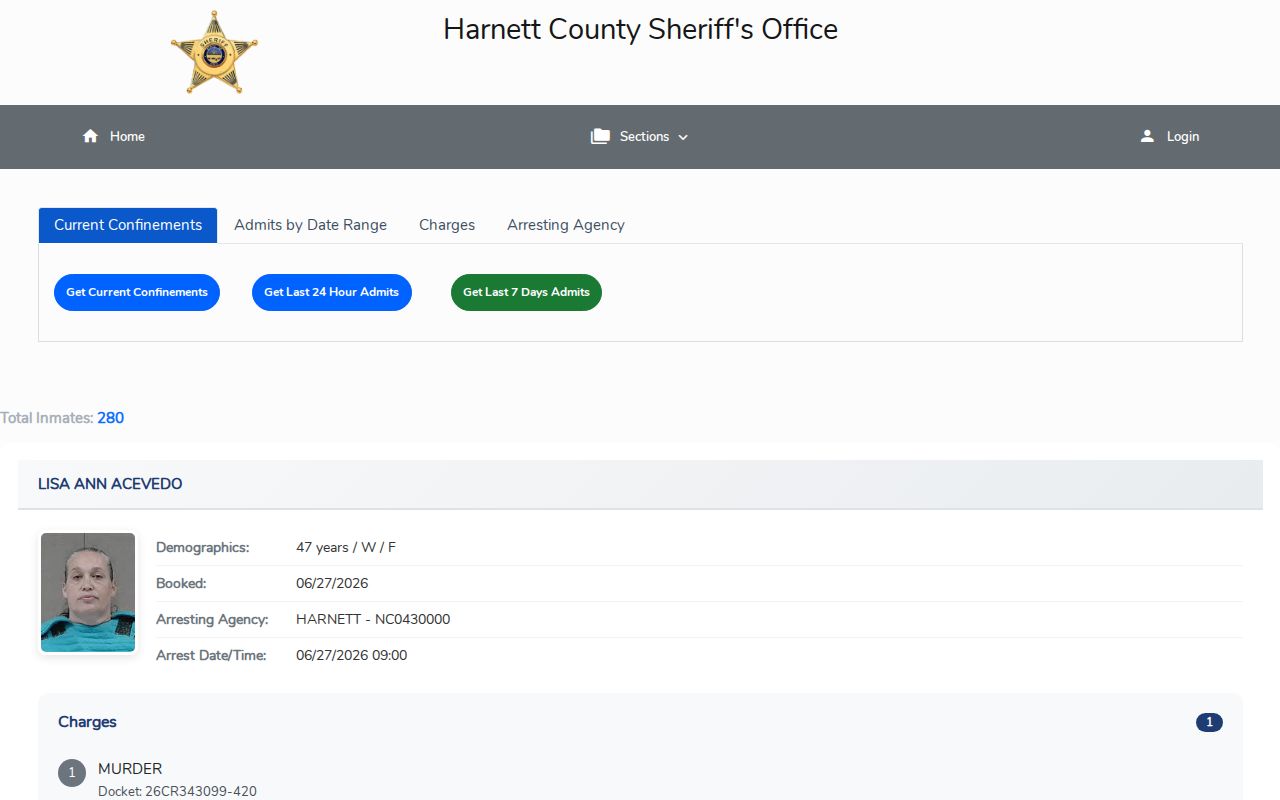
The “Current Confinements” wording is the key limit: presence supports reported custody at that moment, while absence requires a release-versus-transfer check.
Note: A state OPUS event and a county booking belong to different custodians even when the same person appears in both.
Check Harnett Releases After Hours
Harnett County announced an eCourts kiosk outside the magistrates' office at the Sheriff's Office and Detention Center and described it as open to the public around the clock. The kiosk offers a local after-hours path to the case event that may explain a roster change. It does not replace the detention release log, and not every document is guaranteed to be viewable or printable.
The county kiosk notice documents the access point. For complete or certified copies, contact the Harnett Clerk of Superior Court at 301 W. Cornelius Harnett Boulevard or use the criminal division at 910-814-4588.
Two Desks for Harnett Release Records
Harnett's Sheriff's Office, detention functions, Magistrate's Office, and after-hours court kiosk share the Bain Street complex. That physical arrangement supports a useful two-record workflow, but it does not merge the records or their custodians. Detention staff answer when and how physical county custody ended. The court system answers which filed order, bond event, dismissal, or judgment changed the case.
Ask the detention side for the booking and release-log entry, including the departure time and disposition. Use Portal, the kiosk, or the clerk for the related case event. A court order can explain the legal authority without proving when release processing finished. A jail timestamp can prove departure without explaining the final outcome of every charge. The records are strongest when their identifiers and dates agree.
Verify Harnett Post-Release Supervision
Probation, parole, and post-release supervision are different. Probation is a court-imposed supervision sentence and may occur without prison. Parole is conditional release for eligible older-law and special-category cases. Post-release supervision follows prison for many Structured Sentencing felons. Search OPUS and read the supervision type, begin date, status, termination date, and any later revocation or incarceration together.
The NCDAC Division of Community Supervision operates offices statewide. A supervision office does not prove where a person lives, and cases can move across counties or states. Probation and parole verification should include the Commission's role, monthly parole results, and the full dated supervision sequence.
Note: An office assignment identifies supervision administration and should not be used to infer where a person lives.
Harnett Release and Reentry Directory
NCDAC publishes an official Harnett County reentry resource directory that can route a released person toward local service providers. It is a directory snapshot, not a custody or supervision record. Its entries, telephone numbers, program details, and availability can change, so each provider should be checked directly before a person relies on the listing.
The directory does not establish whether someone is on probation, parole, or post-release supervision. OPUS and NCDAC remain the sources for those dated legal statuses. Use the directory for practical navigation after release while keeping service information separate from release verification and the court case.
Track Other Harnett Release Systems
North Carolina calls its VINE service NC SAVAN. A person-specific VINELink search can show a reporting provider, custody wording, and update context, and can offer confidential event registration. Treat an alert as corroboration. Reopen the record and call the reporting custodian to distinguish release from transfer. Registration options and provider limits depend on the live record.
For federal custody, the BOP Inmate Locator generally covers federal prisoners from 1982 forward and may show a release date. A federal pretrial detainee may remain under USMS authority before BOP designation. ICE uses a separate Online Detainee Locator. A Harnett release to ICE means county custody ended and immigration custody began, not that the person entered the Harnett community.
The official federal locator interface is shown here.
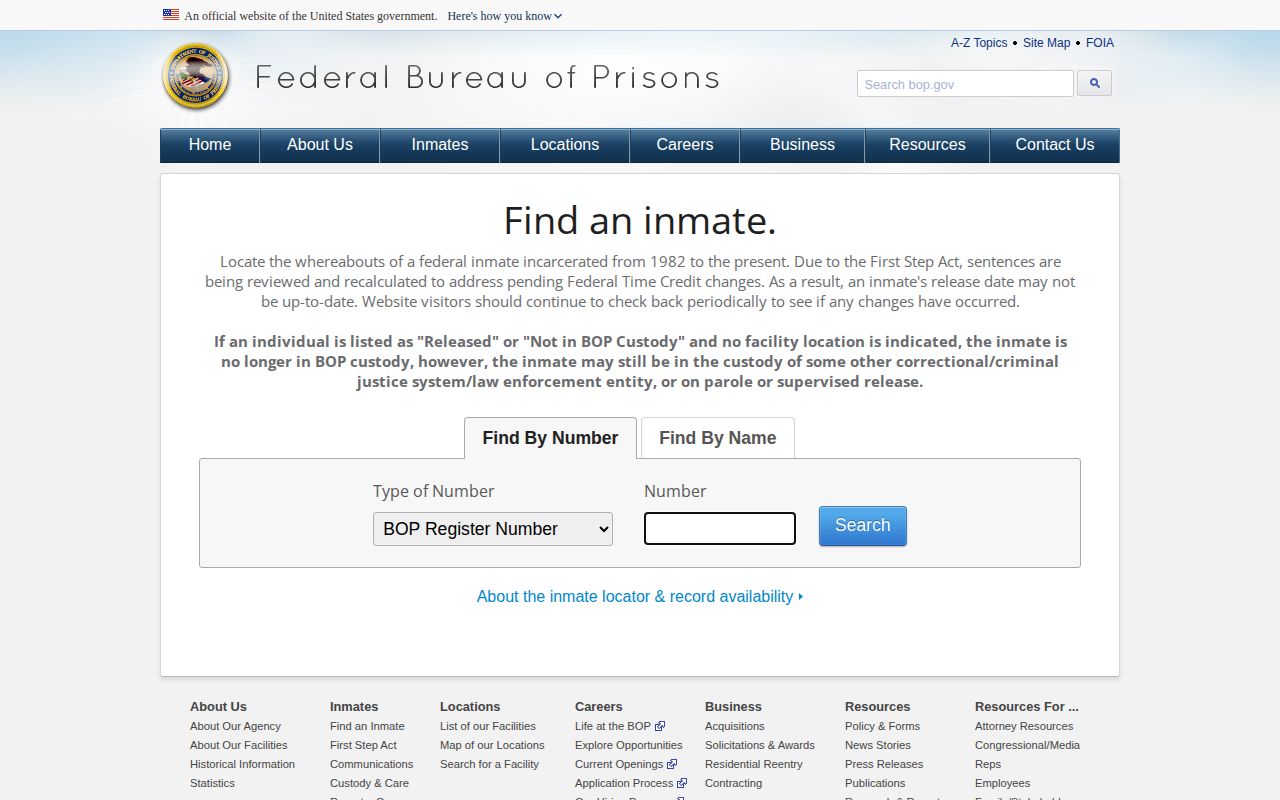
Federal locator results must be kept separate from county jail, North Carolina prison, and immigration records.
Where Harnett Release Records Appear
The right system depends on the custody segment being checked. A current roster answers a present-tense question. A release entry records a completed movement. Court and supervision records add legal outcome and what happened after physical custody.
| System | Best use | Critical limit |
|---|---|---|
| Harnett Current Confinements | Reported county custody now | Absence is not release proof |
| Sheriff release entry | County departure date, time, and disposition | May require a direct request |
| Harnett eCourts file | Order, bond event, judgment, or disposition | “Disposed” is not a release timestamp |
| NCDAC OPUS | State prison and supervision history | Does not cover a jail-only booking |
| VINELink or NC SAVAN | Provider event and notification | Coverage and timing vary |
| BOP or ICE locator | Federal or immigration custody | Each covers only its own system |
Note: A notification or locator result covers only the reporting system and cannot rule out custody held by another authority.
Getting Home After Harnett Release
The Harnett Area Rural Transit System operates demand-response transportation. No reviewed source promises a fixed HARTS stop, a release shuttle, or immediate pickup at the detention center. A released person or family should contact HARTS in advance and confirm current service rather than assume a vehicle waits at 175 Bain Street.
Release time, exit door, property-return steps, waiting area, and weekend procedures were not published in the sources reviewed. Detention staff should confirm those operational details. Transportation planning should also account for a transfer: someone moved to NCDAC, another county, federal custody, or ICE will not leave from the county complex as a community release.
Choose the Harnett Release Facility
Two Lillington institutions create frequent search confusion. The Harnett County Detention Center is the sheriff's jail. Harnett Correctional Institution is a state prison with a statewide OPUS record. A Harnett conviction does not guarantee confinement at Harnett Correctional Institution, and a state prisoner housed there may have been convicted elsewhere. Federal and ICE pages describe locator systems and transfer paths because no local BOP or verified ICE detention facility was identified.
- Harnett County Detention Center: county booking, local custody, and sheriff release records.
- Harnett Correctional Institution: NCDAC prison events and state release history.
- Other North Carolina Prisons: statewide placement and transfers for Harnett cases.
- Federal Bureau of Prisons Facilities: federal sentence and locator records.
- ICE Detention Network: immigration custody following a transfer.
Two Lillington Release Record Systems
Harnett Correctional Institution began as a county prison assumed by the state after the 1931 Conner Bill. It is now a North Carolina Department of Adult Correction medium-custody prison with a published capacity of 988. Its history and location can make it easy to confuse with the Harnett County Detention Center, which is the sheriff-operated county jail at Bain Street.
The state prison uses statewide OPUS release and supervision records. The county jail uses sheriff booking and release records. Ending an assignment at Harnett Correctional Institution may mean transfer to another North Carolina prison rather than release. Likewise, a Harnett County conviction may lead to confinement elsewhere in the state. Search by custodian and dated event, not merely by the shared county name.
Note: Facility proximity in Lillington does not join county detention records with statewide prison release and supervision records.